

If you’ve noticed mosquitoes consistently invading your yard, it’s essential to understand the underlying factors at play. Stagnant water sources, even in minimal amounts, can create prime breeding grounds. Dense vegetation and poor maintenance further enhance their habitat. It’s also important to reflect on how nearby wildlife and climate conditions contribute. Identifying these reasons can help you implement effective strategies. What else might be attracting these pests to your outdoor space?
Stagnant Water Sources
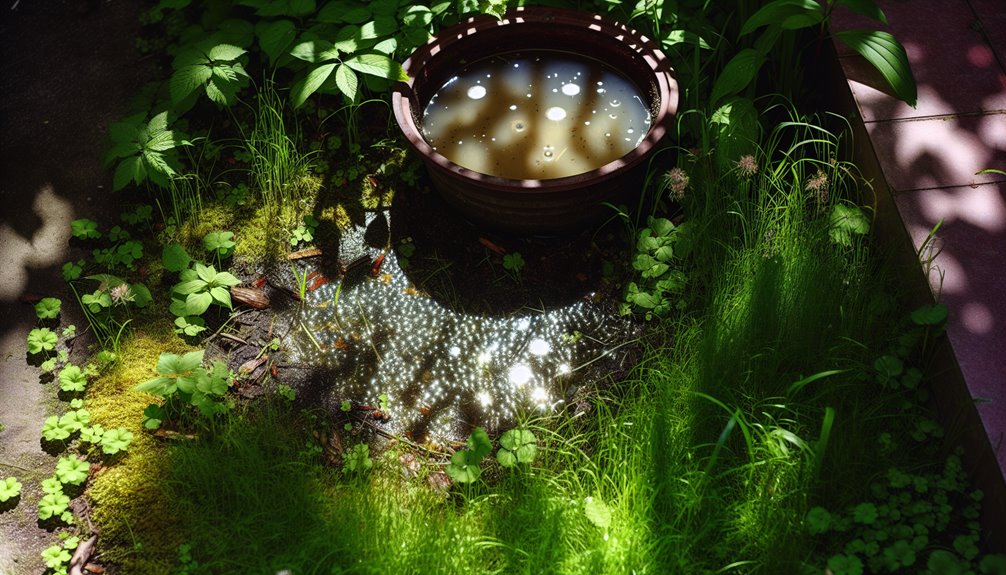
While you mightn’t realize it, stagnant water sources in your yard can be a breeding ground for mosquitoes. Standing water, such as stagnant pools or neglected water containers, provides an ideal environment for female mosquitoes to lay their eggs.
These insects prefer shallow, still waters for their reproductive cycle, enabling their larvae to thrive. Even small amounts of water can become problematic; a mere capful can support mosquito development.
As a responsible homeowner, regularly inspect your yard for any stagnant water sources. Empty or treat these containers to disrupt the life cycle of mosquitoes.
Dense Vegetation
Stagnant water isn’t the only factor that attracts mosquitoes; dense vegetation in your yard also plays a significant role in their presence.
Mosquitoes thrive in areas with dense foliage, which provides shelter from the elements and natural predators. These environments create ideal breeding grounds, allowing mosquitoes to rest and reproduce undisturbed.
Dense vegetation offers moisture and shade, essential for their survival, making your yard a perfect natural habitat.
If you want to reduce mosquito activity, consider managing the amount of dense foliage in your landscape. Trim back overgrown areas and create more open spaces to disrupt their breeding cycles.
Poor Yard Maintenance
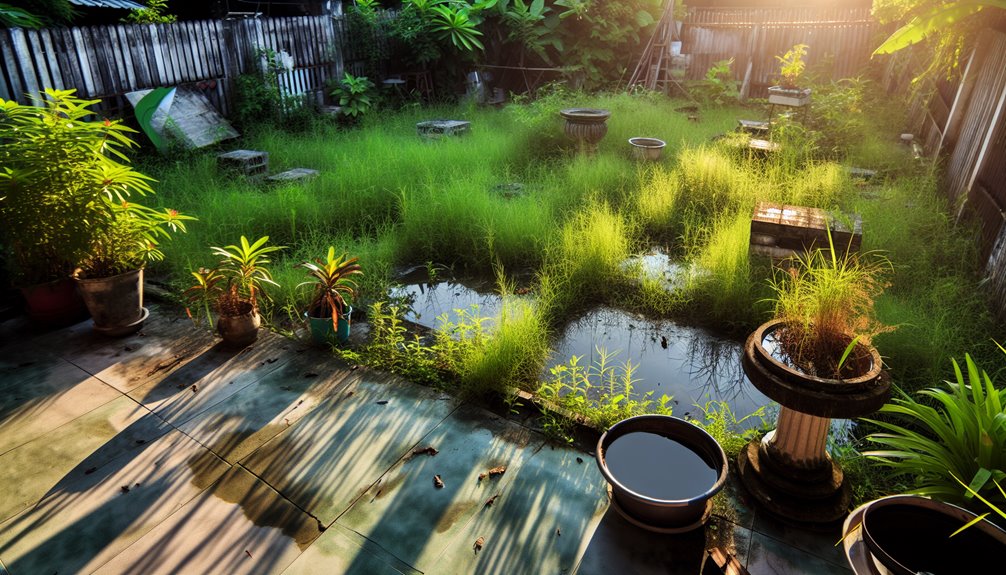
When you neglect yard maintenance, you inadvertently create an inviting environment for mosquitoes to thrive.
Poor lawn care practices, such as overwatering or failing to mow regularly, can lead to standing water and dense grass, both of which attract these pests.
Additionally, debris like fallen leaves or unkempt flower beds can trap moisture, providing ideal breeding grounds.
Maintaining yard cleanliness is essential; it eliminates potential habitats for mosquito larvae.
Regularly inspecting your yard for any stagnant water sources and properly managing your landscaping can greatly reduce mosquito populations.
Attracting Wildlife
Attracting wildlife to your yard can have unintended consequences, especially when it comes to mosquito populations. While bird feeders and other wildlife habitats enhance biodiversity, they can also create favorable environments for mosquitoes.
For instance, standing water from bird baths or poorly maintained feeders can serve as breeding grounds. Additionally, a diverse array of animals may inadvertently support mosquito life cycles by providing food or shelter.
To mitigate this, you can regularly clean and refill bird feeders and baths, ensuring water remains fresh and moving. By balancing your desire to support local wildlife with proactive yard management, you can enjoy a vibrant ecosystem while minimizing mosquito attraction in your outdoor space.
Climate and Weather Conditions
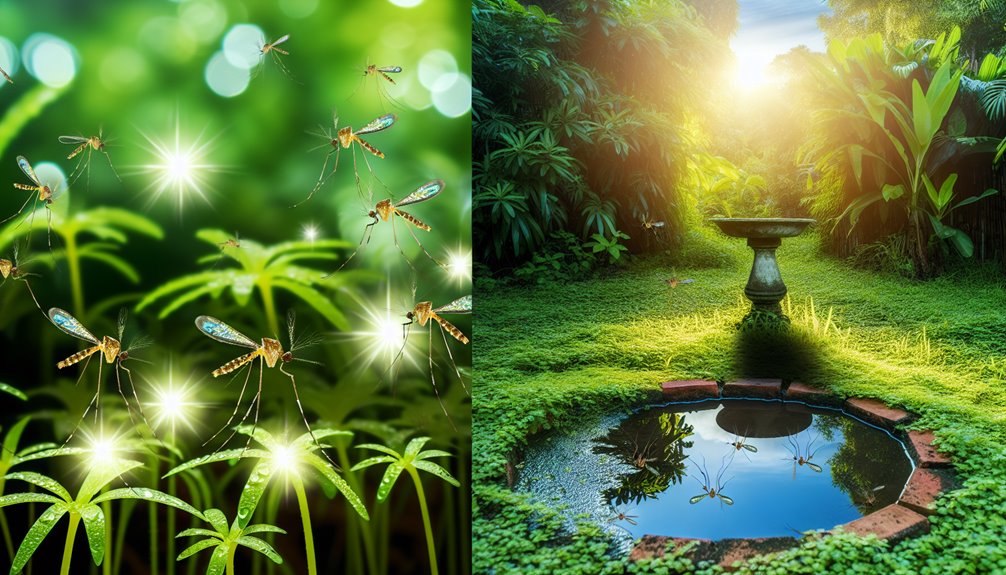
Although you might enjoy warm summer evenings in your yard, the climate and weather conditions can greatly influence mosquito populations. Mosquitoes thrive in specific humidity levels, as higher moisture content in the air supports their breeding and survival.
When humidity levels rise, these pests become more active, increasing the likelihood of bites. Additionally, temperature fluctuations play an essential role; warmer temperatures accelerate their life cycle, enabling rapid population growth.
Conversely, cooler temperatures can temporarily reduce activity, but as soon as conditions warm again, populations can rebound. Understanding these factors helps you create an environment that’s less inviting for mosquitoes, allowing you to enjoy your outdoor space more comfortably while serving your community by reducing their presence.
Outdoor Lighting
While you might enjoy the ambiance created by outdoor lighting, it can inadvertently attract mosquitoes to your yard. Many outdoor lights emit wavelengths that are particularly appealing to these pests, drawing them closer to your gatherings.
Traditional incandescent bulbs are especially problematic, but you can mitigate this by opting for solar lights that emit less attractive wavelengths. Additionally, installing motion sensors can help minimize light exposure during inactive periods, reducing the chances of attracting mosquitoes.
Unsuitable Landscaping
If your yard features dense vegetation, standing water, or overgrown shrubs, you’re unknowingly creating an ideal habitat for mosquitoes.
These pests thrive in such environments, as they provide ample shelter and breeding grounds. Invasive plants can exacerbate the issue by outcompeting native species and creating dense thickets where mosquitoes flourish.
Thoughtful landscape design can mitigate these risks by prioritizing open spaces and well-drained areas. Consider incorporating native plants that naturally deter mosquitoes while enhancing your yard’s biodiversity.
Regular maintenance, including trimming overgrown shrubs and removing standing water, is essential in preventing mosquito infestations.
Neighboring Properties
When your neighbors neglect their yards, it can create a ripple effect that invites mosquitoes into your own space. Stagnant water, overgrown vegetation, and piles of debris in adjacent yards provide ideal breeding grounds for these pests.
Without proper fence barriers, mosquitoes easily migrate from one yard to another, diminishing your efforts to maintain a mosquito-free environment. Effective neighbor cooperation is vital; discussing yard maintenance and mosquito control strategies can greatly reduce populations.
Encourage your neighbors to eliminate standing water and manage their landscaping, creating a united front against these unwelcome insects. By fostering a community-focused approach, you enhance your own outdoor experience while helping others enjoy their yards too.
Together, you can create a healthier, more enjoyable neighborhood.
Lack of Mosquito Control Measures
Neglecting mosquito control measures can greatly undermine your efforts to keep these pests at bay, especially if neighboring properties are also lacking in preventative strategies.
Without an effective plan, mosquitoes can thrive, leading to increased nuisance and health risks.
Consider implementing the following:
- Chemical Repellents: Regularly apply EPA-approved products in your yard to deter mosquitoes.
- Standing Water Removal: Eliminate any stagnant water sources, as they serve as breeding grounds.
- Biological Control: Introduce natural predators like fish or bats to help manage the population.
- Regular Yard Maintenance: Keep your lawn trimmed and bushes pruned to reduce resting spots for mosquitoes.
Seasonal Breeding Cycles
Although mosquito populations can fluctuate throughout the year, their breeding cycles are heavily influenced by seasonal changes in temperature and humidity.
Warmer temperatures in spring and summer create ideal conditions for the mosquito life cycle, allowing eggs to hatch quickly and larvae to mature. As temperatures rise, mosquitoes breed more frequently, leading to population surges.
Conversely, cooler autumn temperatures can slow their reproduction, but many species enter a dormant state, preparing for resurgence in spring.
You can mitigate these effects by managing standing water and maintaining your yard.
Conclusion
In wrapping up, I want to share that I truly understand how frustrating a mosquito problem can be in your yard. It often feels like these pesky bugs just won’t go away! With stagnant water, overgrown shrubs, and seasonal cycles at play, it can create the perfect environment for them to thrive. But don’t worry! By taking simple steps like removing standing water and maintaining your yard, you can significantly reduce their presence. I’m here to help you transform your outdoor space into a peaceful retreat. If you’d like to learn more about how we can assist you, please visit us at mosquitoeliminatorsms.com or give us a call at (601) 336-2277. Together, we can make your yard a mosquito-free haven!